FreightRate GPT
A complex, manual industry, designed into a usable AI product.
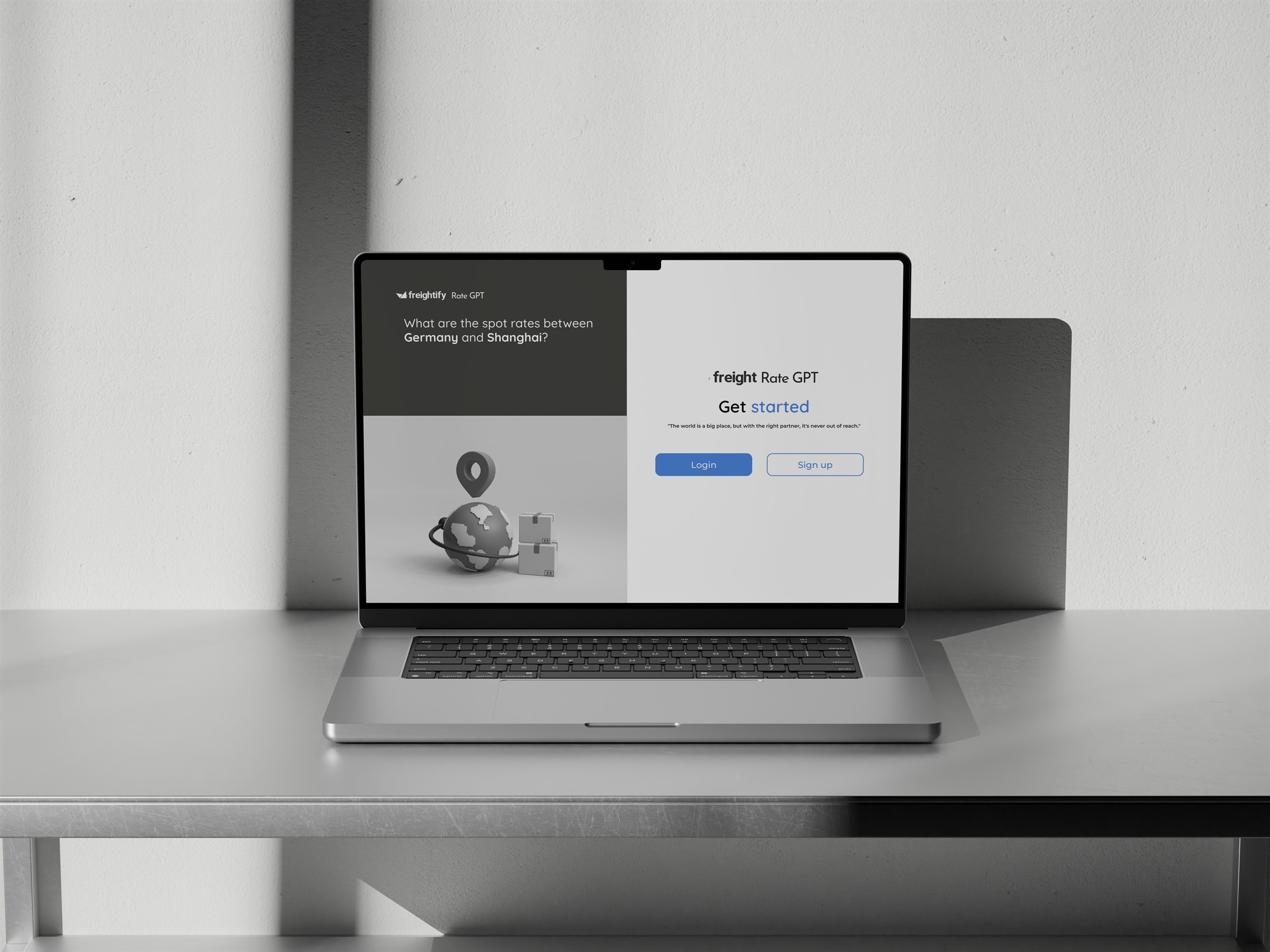
The domain
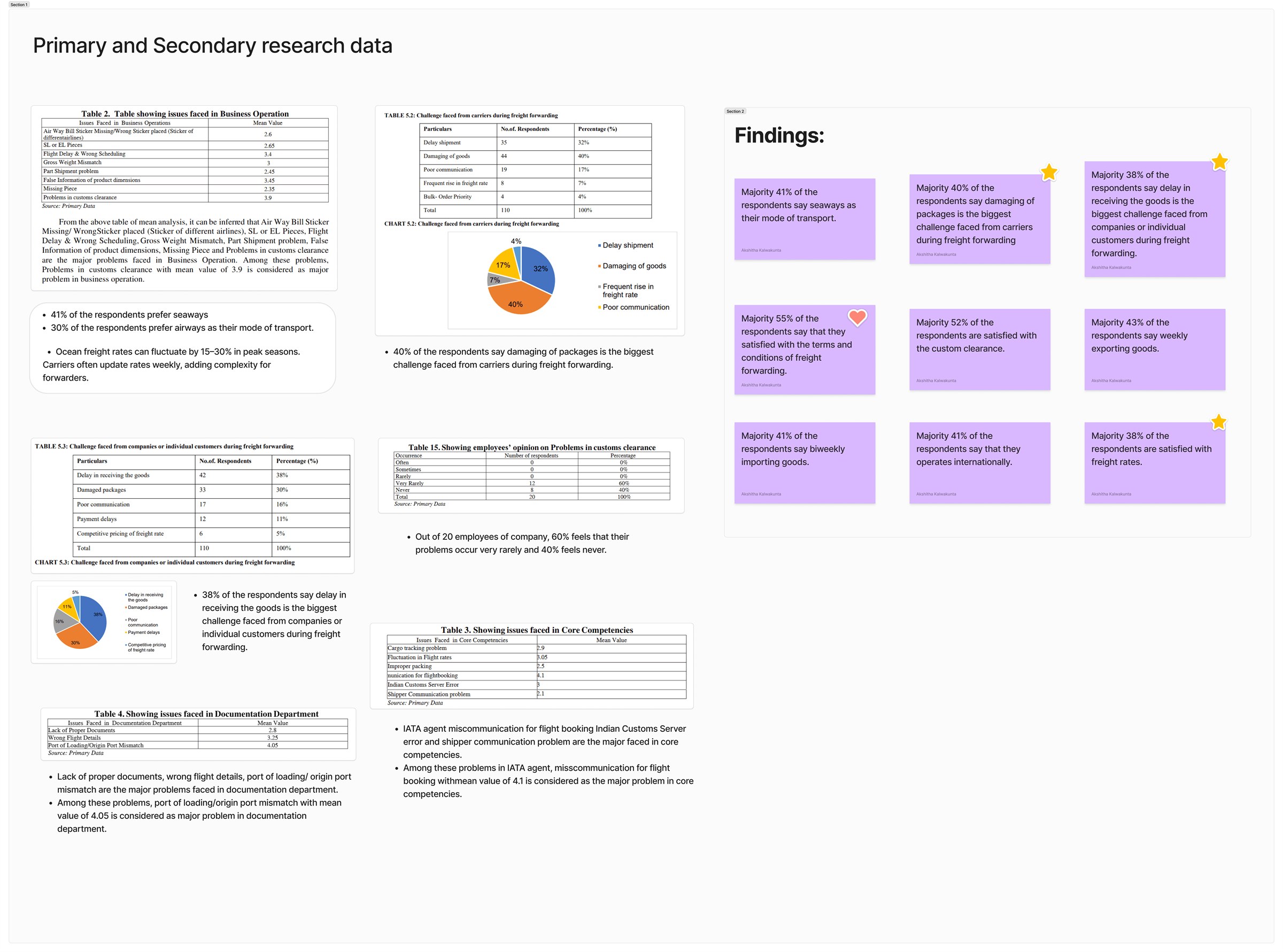
Freight forwarding is a large industry that software mostly skipped. Agents procure shipping rates and build client quotations by hand, across email, spreadsheets, and phone calls. The digital freight market was worth around $28 billion in 2023 and is projected to reach $76 billion by 2028, growing at roughly 22 percent a year, yet the core daily workflow still runs manually.
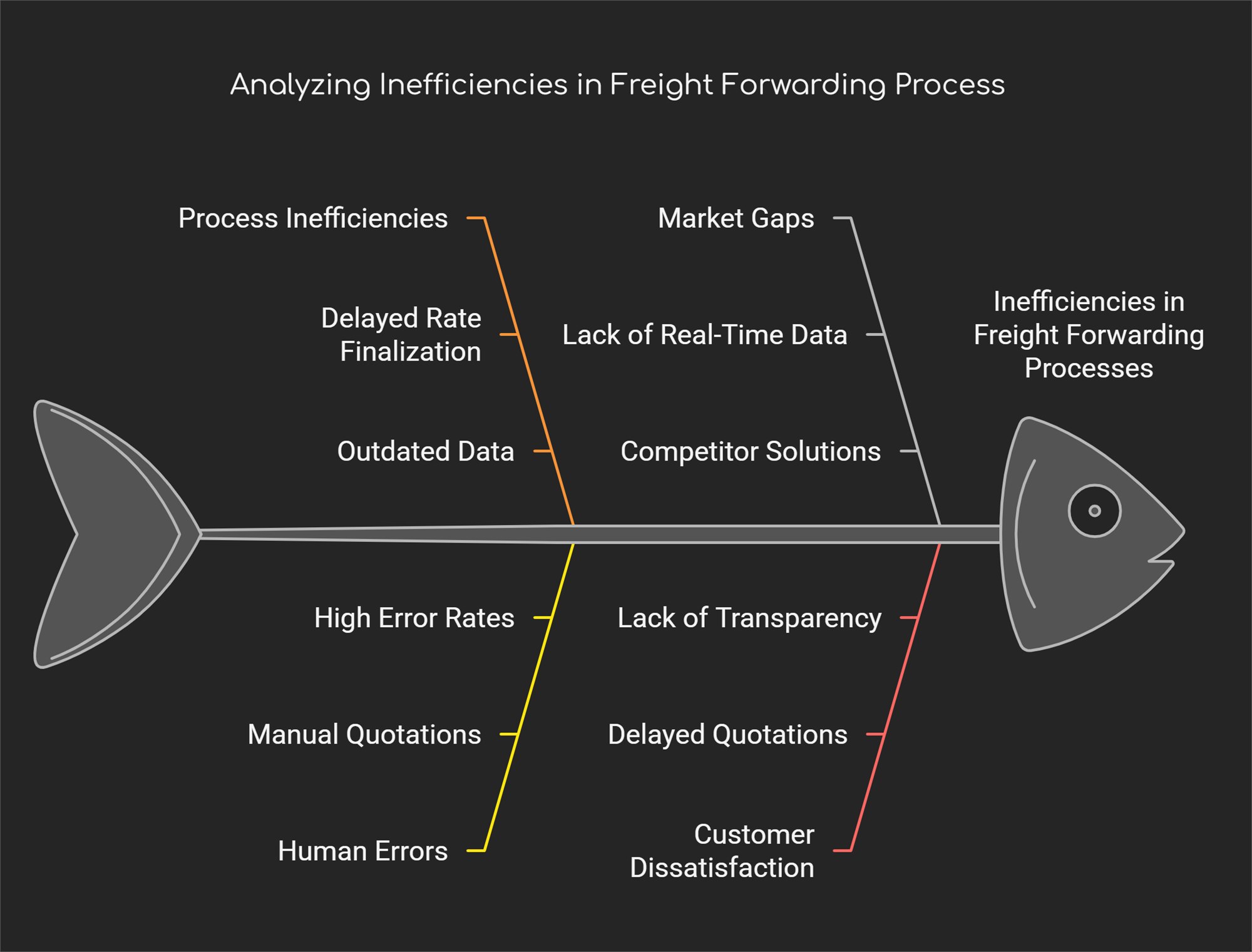
The cost of that gap is concrete. A single rate-and-quote cycle takes 12 to 48 hours. Manual quoting carries a 20 to 30 percent error rate, enough to lose an estimated 15 to 20 percent of clients to slow, unreliable responses. 67 percent of supply chain executives name system integration as their top technology challenge, and disconnected systems cost firms an estimated $1.5 to $2.3 million a year in lost revenue.
In a market where the client picks whoever quotes first and best, the manual process is the bottleneck that loses deals.
The real problem
The obvious brief is "make quoting faster." The real problem is harder. A freight cost is genuinely complex, built from stacked layers of origin charges, customs, freight, and destination charges, and a forwarder puts their name and their client relationship on every quote they send. Automating the number is not enough. The output has to be transparent and verifiable enough that a professional will stake a client on a figure an AI produced.
That framed the work: make a dense domain legible, and make an AI's output trustworthy enough to send.
Who it was designed for
The work was anchored on a specific user: a 44-year-old forwarder with two decades in the trade, running a business built on hard-won carrier relationships. Not anti-technology, but anti-risk.
He will not send a client a number he cannot stand behind. So every AI output had to be inspectable, not just fast.
The design
Research came first, structured through prioritization and solution-mapping before any screen. That produced two divergent directions, a competitive rate-bidding marketplace and an AI rate assistant, and the assistant was chosen as the sharper fit for the daily workflow.
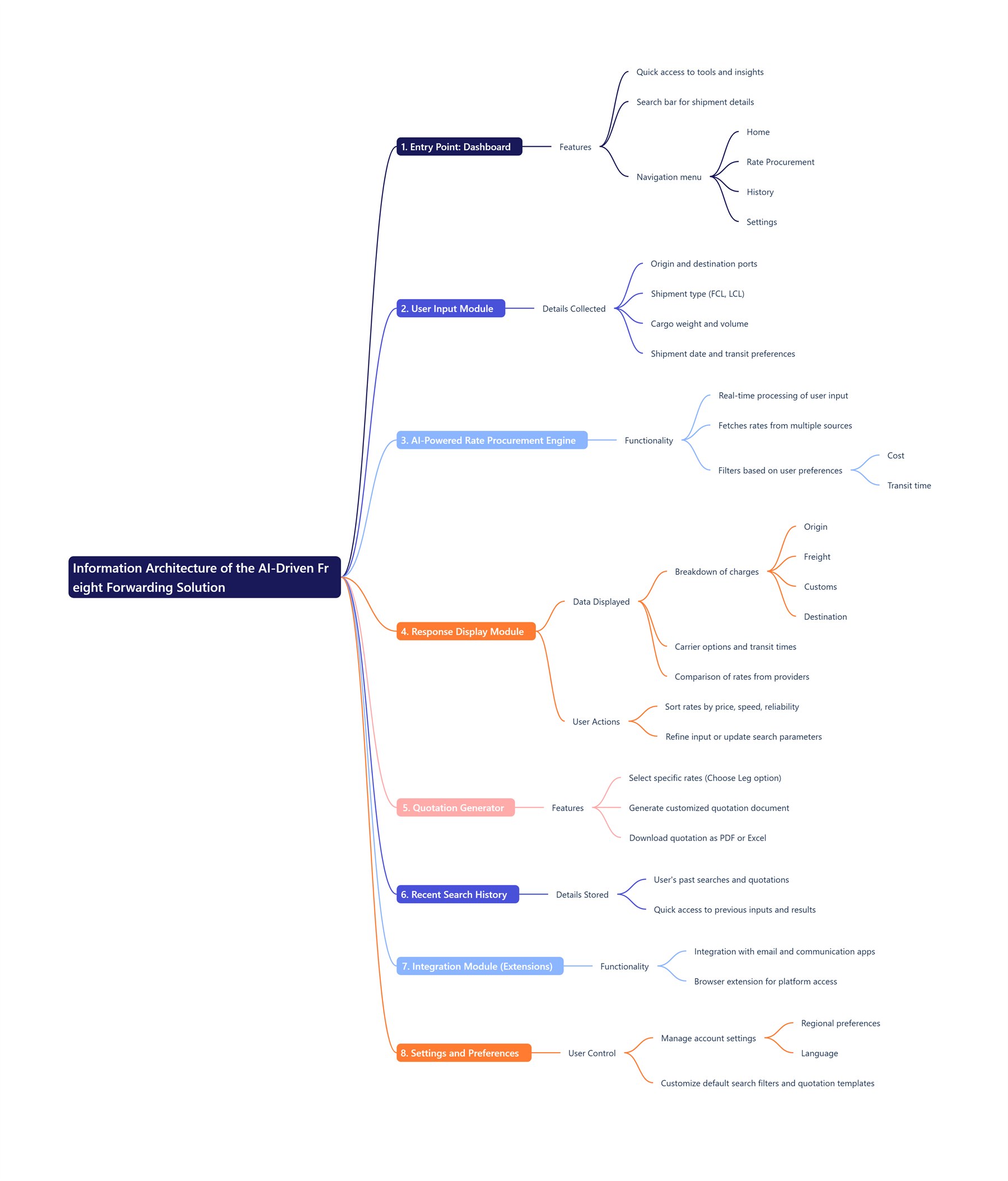
The product took the form of a conversational, domain-specific AI interface. The decisions that carried it:
01Meet the forwarder's data where it lives.
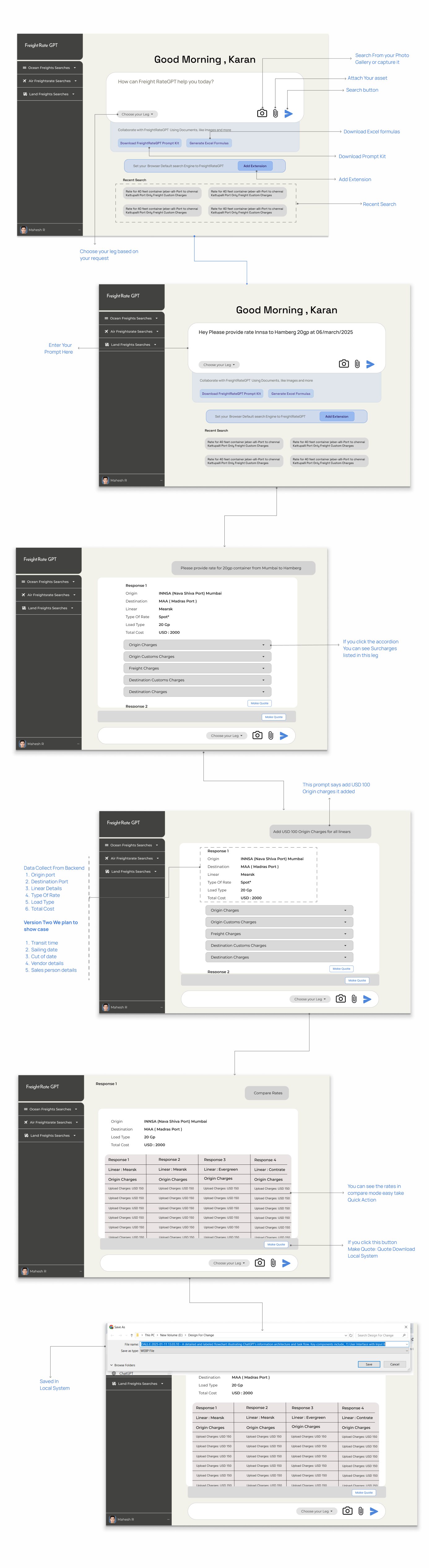
Rate information arrives as screenshots, PDFs, and spreadsheets, never as clean inputs. So the intake is multimodal: type a plain request, or drop in an image, a PDF, or an Excel file and let the AI extract the data. It works from the messy sources forwarders already have on hand.
02Never show a black-box number.
Each response opens the full cost structure through progressive disclosure: a headline total, then itemized accordions for origin charges, customs, freight, and destination. A forwarder can inspect every line before trusting it. In a domain this technical, legibility is what makes the output usable.
03Let the forwarder judge.
The assistant returns multiple rate options, with a compare view that sets them side by side across carriers and charges. The design assumes the professional makes the final call, which is what earns confidence in the tool.
04Close the loop.
One action turns a chosen rate into a client-ready quotation, and searches organize by freight mode, ocean, air, and land, matching how forwarders already segment their work.
Outcome
The concept takes a forwarder from rate request to client-ready quotation in 2 to 5 minutes, against a manual baseline of 12 to 48 hours. That compression comes from the workflow design itself.
12–48 hrs
the manual baseline, by hand
2–5 min
from rate request to client-ready quotation
This is a concept, validated with freight professionals rather than shipped into production. In testing, users moved through the flow to a finished quotation without the stalls the manual process forces.
The work in one line
A complex, un-digitized industry was researched, structured, and designed into an AI product that turns a two-day manual task into minutes, with the harder half of the work being to make the output legible and trustworthy enough for a professional to send.